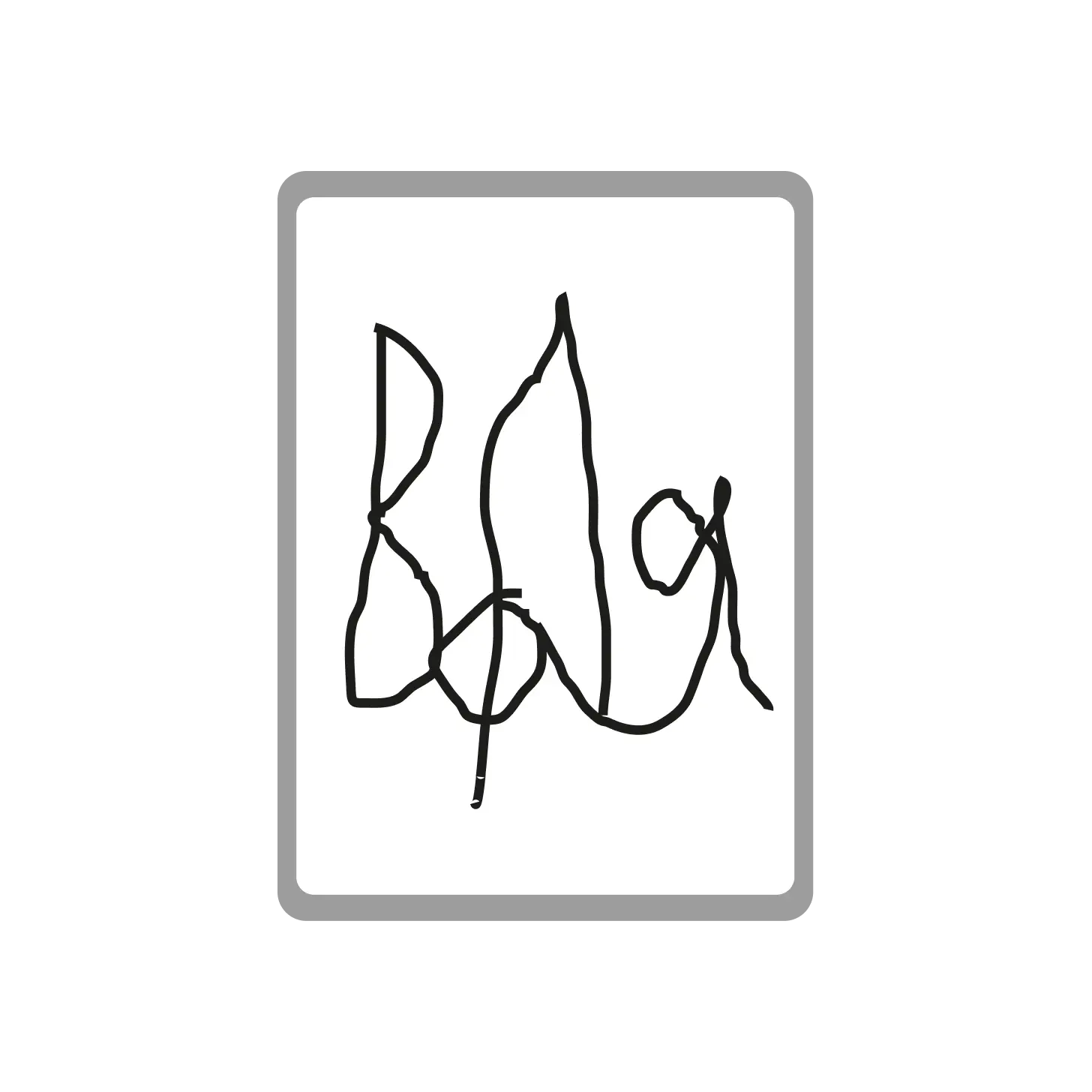
Create a trident from the word “воля” (Ukr. freedom). This is more than just an exercise. It’s a way to find a deeper meaning. The trident is an icon of pure power, passed through time and space by our ancestors.
On the seals of Prince Sviatoslav we see the bident, the sign of the Rurik dynasty. His son, Volodymyr the Great, transformed it into a trident. It was not just a family emblem, but the embodiment of the princely state, representing power and its heir. This tradition was continued by Volodymyr’s son, Yaroslav the Wise. The trident found its place on coins, pottery, and bricks used to build church walls. Archaeologists still discover its imprints across all the lands once ruled by the Rus princes.
For centuries, the trident lay dormant, waiting for its time. In 1918, historian and head of the Central Rada, Mykhailo Hrushevskyi, linked the modern Ukrainian state with Kyivan Rus: the trident of Volodymyr the Great was declared as the coat of arms of the Ukrainian People’s Republic, underscoring the continuity of a thousand-year state tradition.
The Soviet authorities banned the symbol, but in vain. It was preserved and passed on, and reclaimed its place as soon as Ukraine restored its independence.
Create a trident from the word “воля.” The idea of freedom runs through the great names of the past into the present. Freedom to build one’s own, to hold to one’s own, to achieve one’s own.
Freedom continues to live within us.