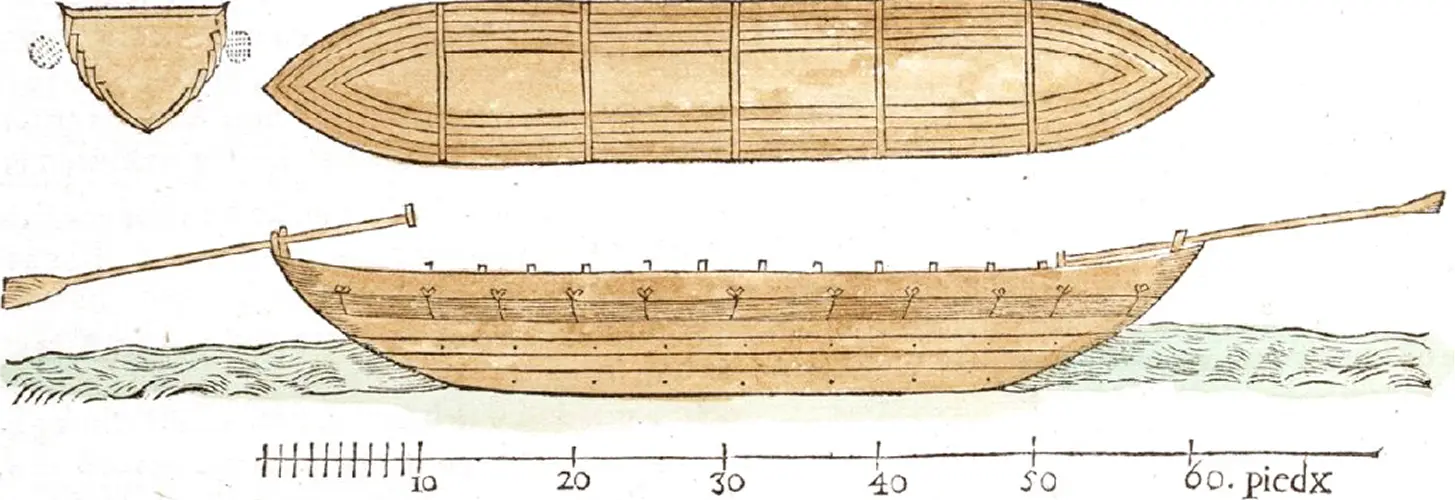
Imagine: a dark night, silence on the water — and then, seemingly out of nowhere, dozens of boats appear near the shore. These are Cossack chaikas. The sentries never noticed them in time. Garrisons and enemy ships had no moment to react. Everything was decided in minutes: the chaikas struck like Ukraine’s naval drones of today — sudden, precise, and devastating.
A chaika was a light, compact, and incredibly effective boat. Its design allowed it to move stealthily yet swiftly. The bow and stern were the same shape, so the vessel could change course without turning around.
In 1615, the Zaporizhian Cossacks set out on 80 chaikas in what seemed like a desperate raid — against Constantinople, the capital of the Ottoman Empire.
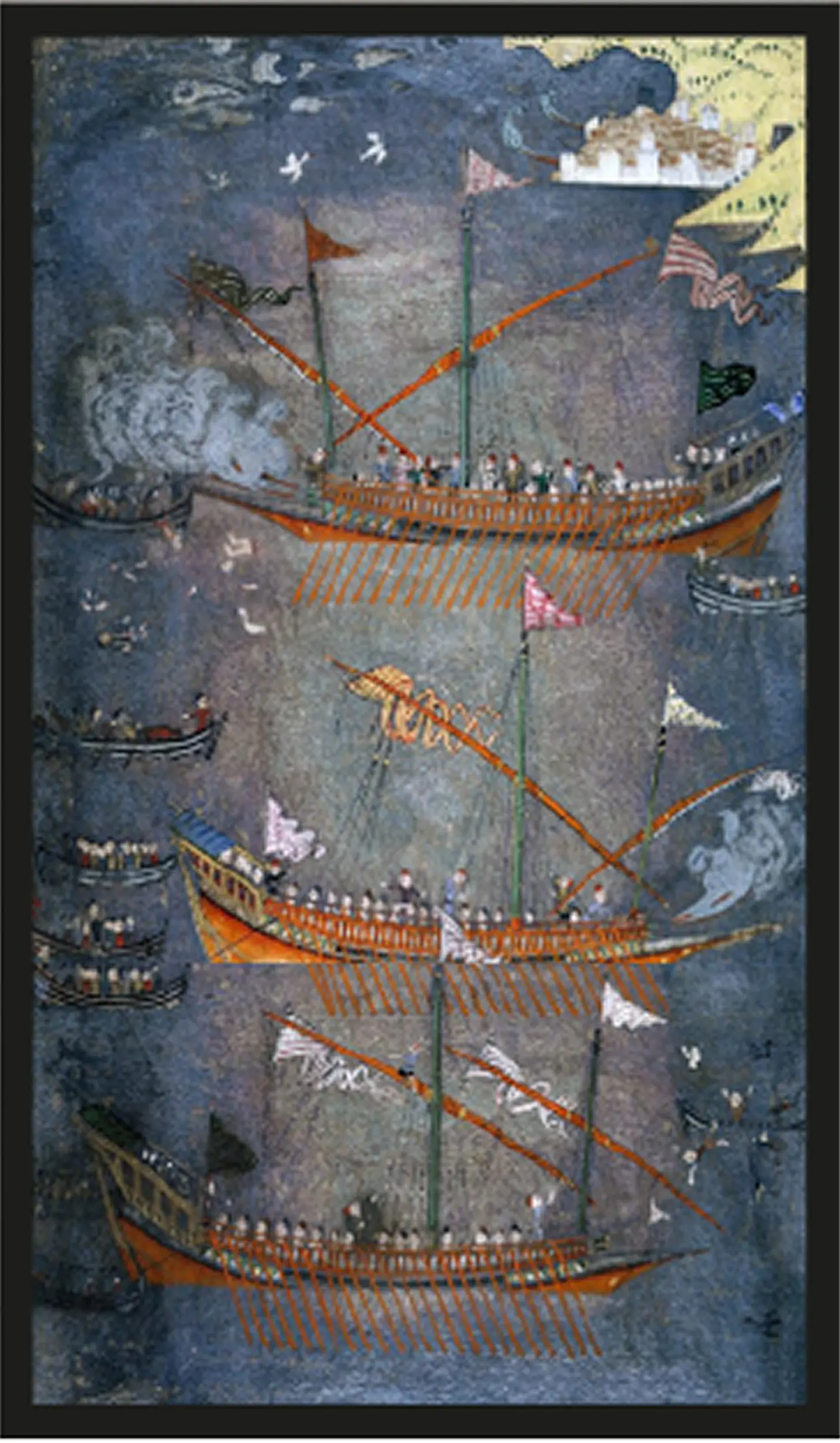
They landed between 2 ports, set much of the area ablaze, and caused a commotion right under the walls of the sultan’s palace. The Turkish ruler dispatched a squadron in pursuit, but at the mouth of the Danube the Cossacks crushed it, capturing the wounded admiral and seizing several enemy galleys as trophies. Upon their return, they dragged the captured vessels to Ochakiv and burned them before the eyes of the city’s defenders. Those soldiers could not return fire — even the sultan’s finest cannon, the legendary Basilica, had a range of only 2 kilometers, while the estuary there stretched more than 10.
The successful Cossack naval campaigns proved that Ukrainians were skilled warriors not only on land, but also at sea.
Pierre Chevalier, a French officer, diplomat, and adviser at the royal mint, was in contact with the Cossacks, writing the following about chaikas in 1663:
“Usually five or six thousand Cossacks assemble, and about sixty men build a single boat; in the space of three weeks they produce eighty to a hundred boats. They embark fifty or sixty men in each vessel, which carries five or six falconets. Each Cossack is armed with two arquebuses with the sufficient supply of powder and bullets.The commander has a small flag on his mast to distinguish his boat from the others.
The Cossacks use two rudders to steer more easily when they must flee; for greater stability on the waves, they fasten bundles of reeds, the thickness of a small barrel, along the sides. Typically the vessels carry ten to twelve or even fifteen oars on each side, and are swifter than Turkish galleys. The Cossacks have poor sails, but they use them only in fair weather, preferring to row when the wind is strong.
For provisions, the Cossacks take only hardtack, which they keep in a cask and draw out as needed through the bung-hole. Besides this, they have a barrel of cooked millet and a barrel of bread soaked in water, which they eat with the millet. This serves them as both food and drink, and they find it wonderfully tasty.
The Cossacks sail together, so close that their oars touch one another. To leave the Borysthenes they wait for the last phase of the moon, so that in the darkness of a moonless night they may pass unnoticed by the galleys watching for them near Ochakiv, a Turkish town at the mouth of the Borysthenes. As soon as the Turks catch sight of the Cossacks, the alarm spreads immediately throughout the whole land and reaches Constantinople.
