Historians debate when exactly Princess Olha traveled to Constantinople — in 946 or 957. The exact date remains unknown. But we know for sure that she received a royal welcome. She attended several imperial receptions and was given lavish gifts. This was a sign: she was accepted into their circle.
It was then that she first saw the imperial throne. Not just a chair, but an embodiment of power. After this journey Olha returned transformed — baptized, with diplomatic connections, and perhaps with an idea of what her own state’s thrones should look like.
Yaroslav the Wise never visited Constantinople. Under his rule, however, Kyiv became a new Constantinople.
The prince’s actual throne has not been found, though it is mentioned in various historical texts. It is assumed that it may have been a carved wooden seat with Byzantine-style inlay. Volodymyr the Great is believed to have had a similar throne in his residence near Kyiv.
But Yaroslav did not simply copy — with mosaics, architecture and books, he created a Kyiv with its own character.
Now, you may continue his work.
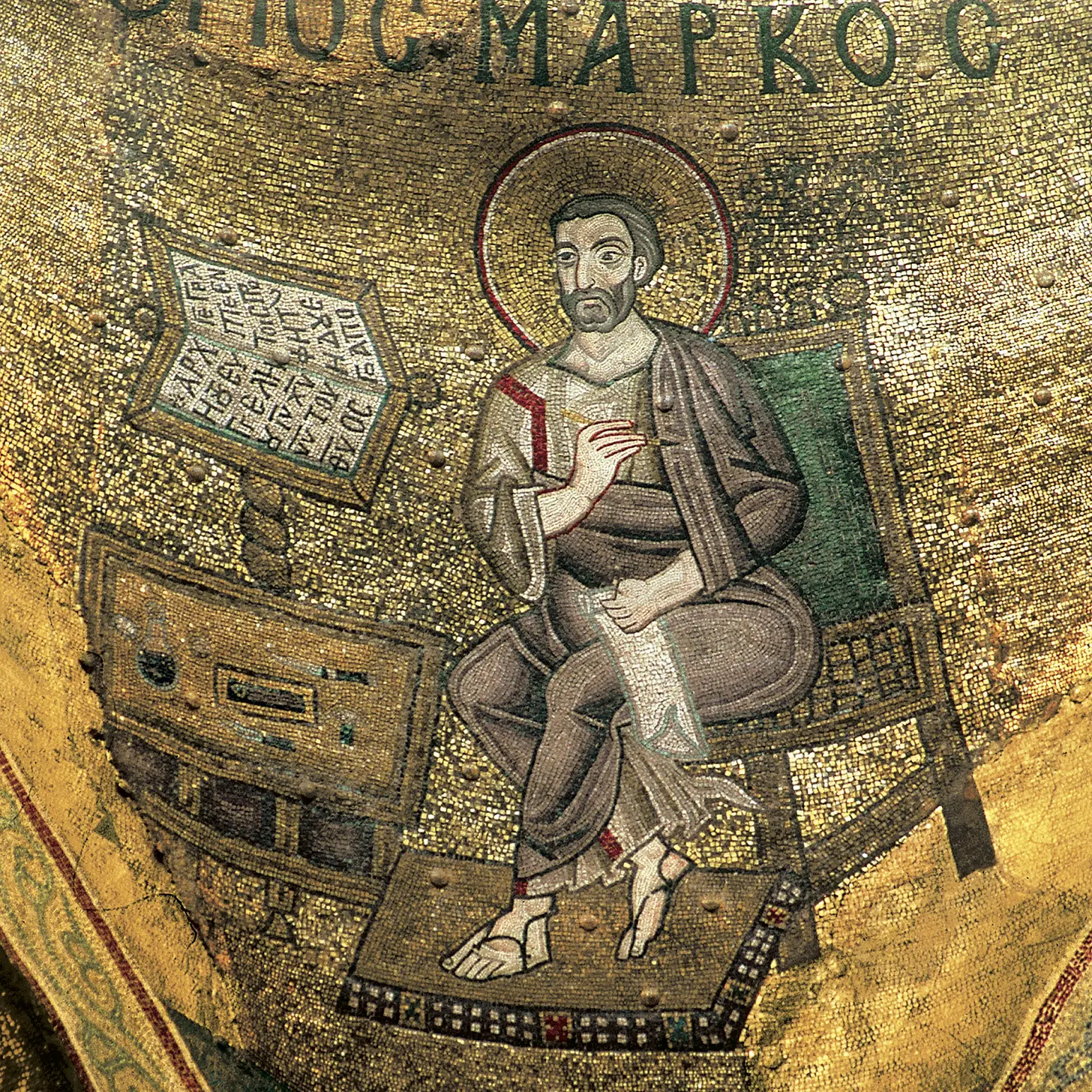
No reliable images or descriptions of these princely thrones have survived. Except, perhaps, on the coins of Volodymyr the Great — but discerning the details is no easy task. However, there is a theory that the Byzantine artists who created the frescoes and mosaics in Kyiv’s Saint Sophia Cathedral had to use something as their template. Most likely, the chair on which the apostles sit in the frescoes is the throne of a Kyiv prince. And the one on which Christ sits is the emperor’s throne in Constantinople. This is both an acknowledgment of the hierarchy of power and a symbol of the connection between Rus’ and Byzantium.
We studied the mosaics in Saint Sophia Cathedral, recreated models, and 3D-printed these thrones — so that each of you can sit on them and feel like an heir to the princely line.
