THE TRUTH
Ukraine is a land with deep roots. To see this for yourself, you need to look beneath the surface. What does our land conceal?
We know much more about this thanks to people who were not afraid to search for the truth. Step by step, Ukrainian archaeologists uncovered milestones of our history hidden underground.
Thanks to their work, we have learned how our ancestors lived, built, fought, hunted, wed, dressed, and entertained themselves.
In this hall you will learn about incredible people whose discoveries transformed not only Ukrainian archaeology — they transformed our understanding of ourselves.
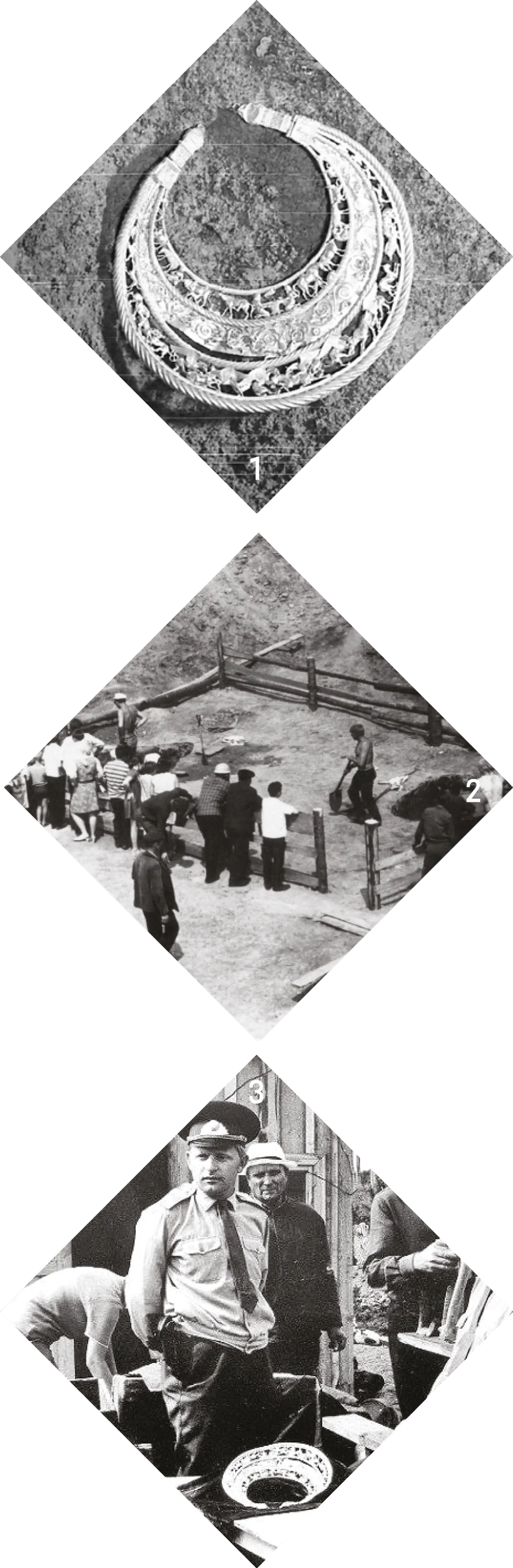
Archaeologist Borys Mozolevskyi was always drawn to Scythian burial mounds. He was convinced that one day he would find true treasure. And he was right.
For years, Mozolevskyi had dreamed of excavating the Tovsta Mohyla burial mound. However, other specialists believed it to be a Bronze Age mound, and the authorities were not prepared to fund such work. Fortunately, the mining and processing plant near Tovsta Mohyla decided to expand the quarry’s operational area and freed up equipment for this purpose.
Mozolevskyi couldn’t let such an opportunity pass, so he immediately traveled to the site from Kyiv.
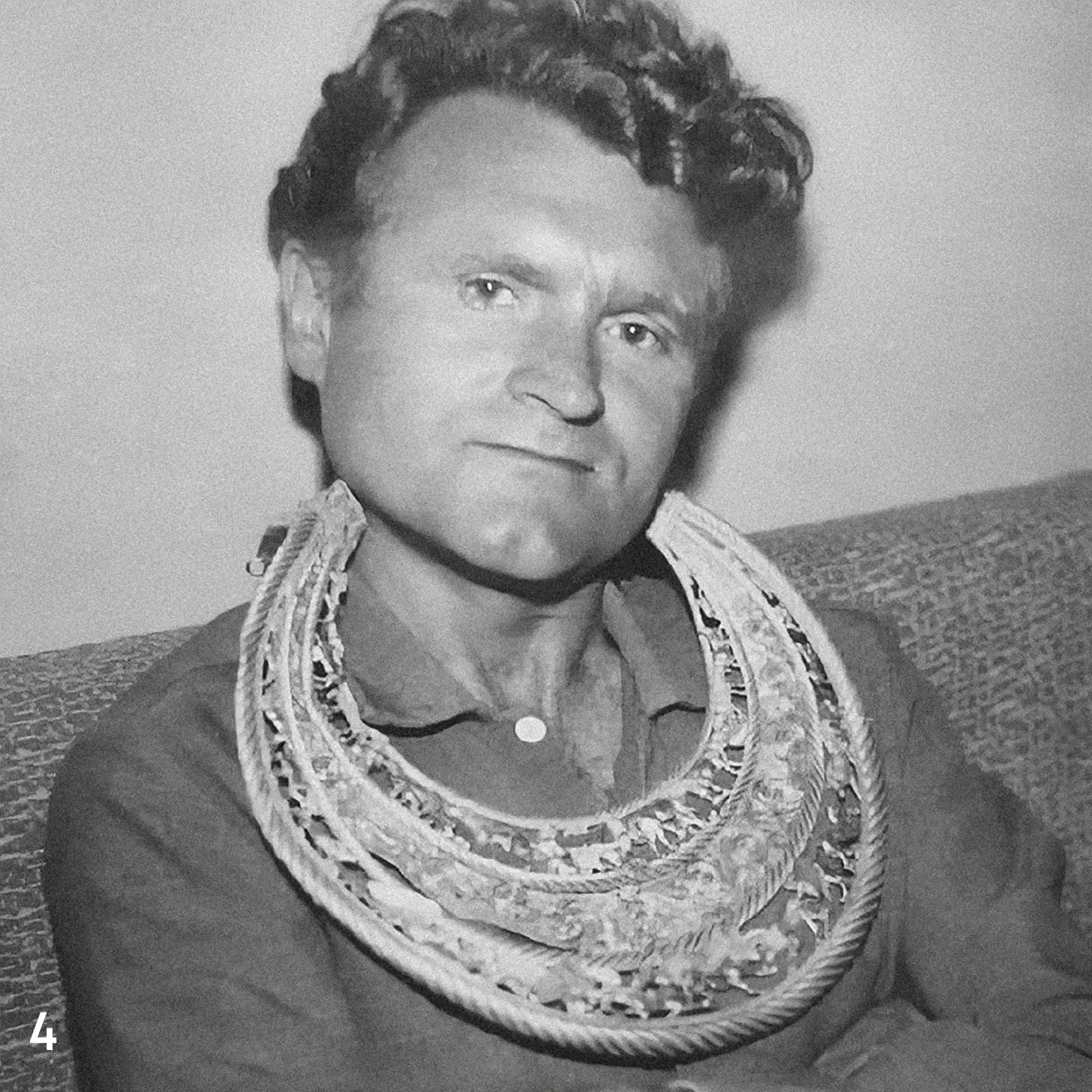
He came across the pectoral at 2:30 PM on June 21, 1971, in a short corridor connecting the Scythian tomb to the entrance pit. In truth, there were many gold objects there, but this one stood out remarkably.
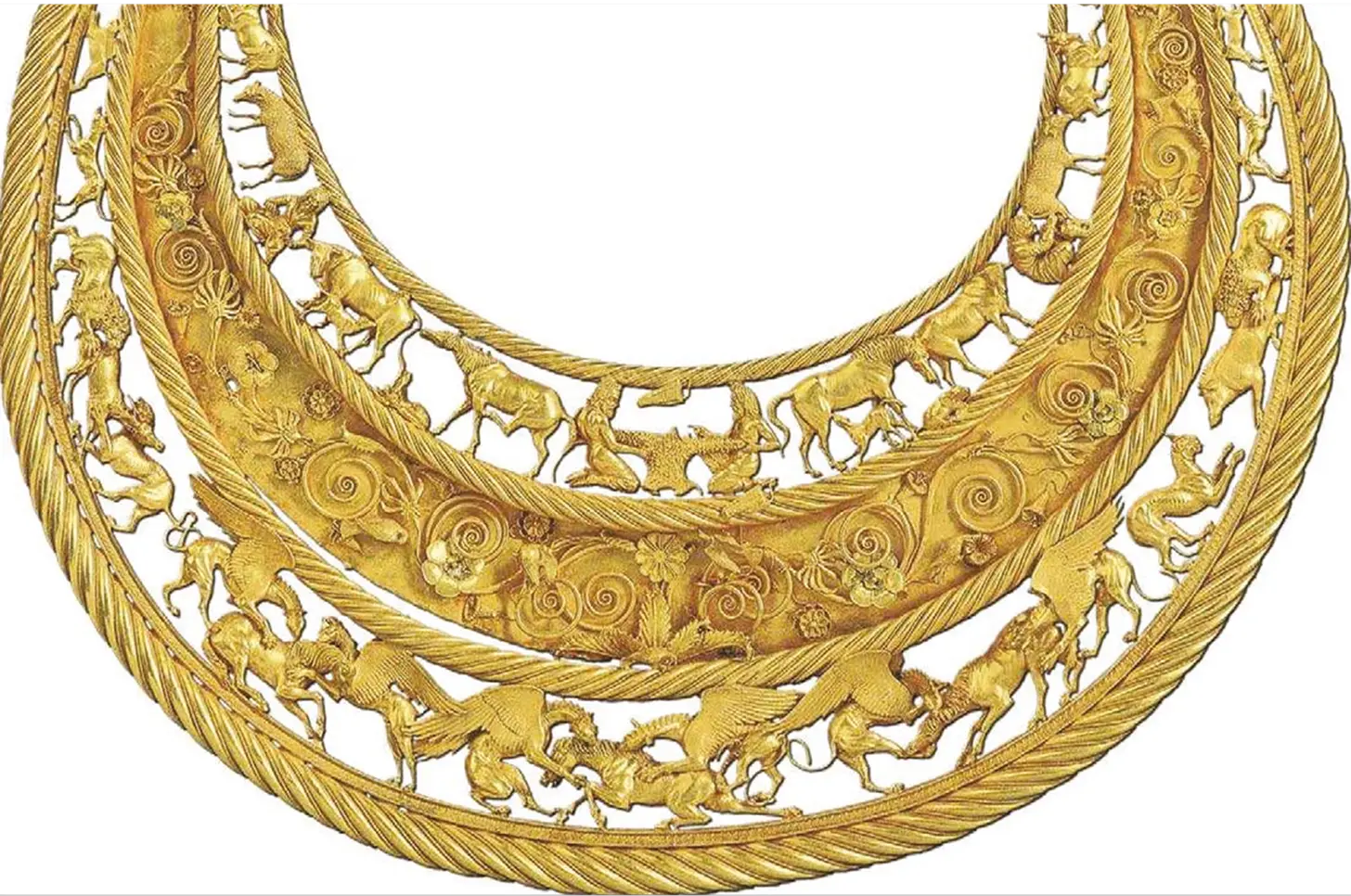
Over a kilogram of pure gold, it was cast more than 2,400 years ago. Most likely, it belonged to a Scythian ruler and was crafted by master Greek artisans. Three tiers of exquisite figures — scenes of Scythian life, livestock, vessels, wild and fantastical animals, hunting scenes, birds, and flowers, with some petals covered in colored enamel.
For Mozolevskyi, the pectoral (breastplate) became not only the discovery of a lifetime but also a way to gain at least some protection against the KGB. At the end of 1965 in Kyiv, he organized an evening dedicated to the Ukrainian Sixtiers poets, after which he was branded as a person with nationalist views. After uncovering the Scythian treasure, Mozolevskyi was left alone. Though the Soviet government would not let him travel abroad, he continued excavating burial mounds and made many more discoveries that still inspire contemporary archaeologists.